Aller au contenu
Alpha
  • Modèles
  • Classements
  • Ori
Contacter l’équipe commerciale

Pied de page

OpenRouterOpenRouter
© 2026 OpenRouter, Inc

Produit

  • Chat
  • Classements
  • Évaluations comparatives
  • Applications
  • Découvrir
  • Modèles
  • Ori
  • Collections
  • Fournisseurs
  • Outils
  • Tarifs
  • Business
  • Enterprise
  • Laboratoire

Entreprise

  • À propos
  • Blog
  • Clients
  • Carrières
    Recrutement
  • Confidentialité
  • Conditions d’utilisation
  • Centre de confiance
  • Assistance
  • Compatible avec OR
  • Données
  • Marque

Développeur

  • Documentation
  • Référence de l’API
  • Plateforme pour développeurs
  • Statut
  • Plan du site pour l’IA

Connecter

  • Discord
  • GitHub
  • LinkedIn
  • X
  • YouTube
Favicon de microsoft

Microsoft AI: MAI-Image-2.5 Pro

microsoft/mai-image-2.5-pro

Évaluations comparativesComparer

Microsoft AI's MAI-Image-2.5 is a high-quality image generation model available via Azure AI Foundry. It produces photorealistic and artistic images from text prompts with support for various aspect ratios.

Modalités
Prix en entrée / sortie
8 $US / 108 $USpar 1M
Contexte
4K
Publié
23 juil. 2026
Évaluations comparativesComparer
Bac à sableÉvaluations comparativesFournisseursTarificationPerformancesDisponibilitéApplicationsActivitéFAQExplorer

Example outputs summary for Microsoft AI: MAI-Image-2.5 Pro

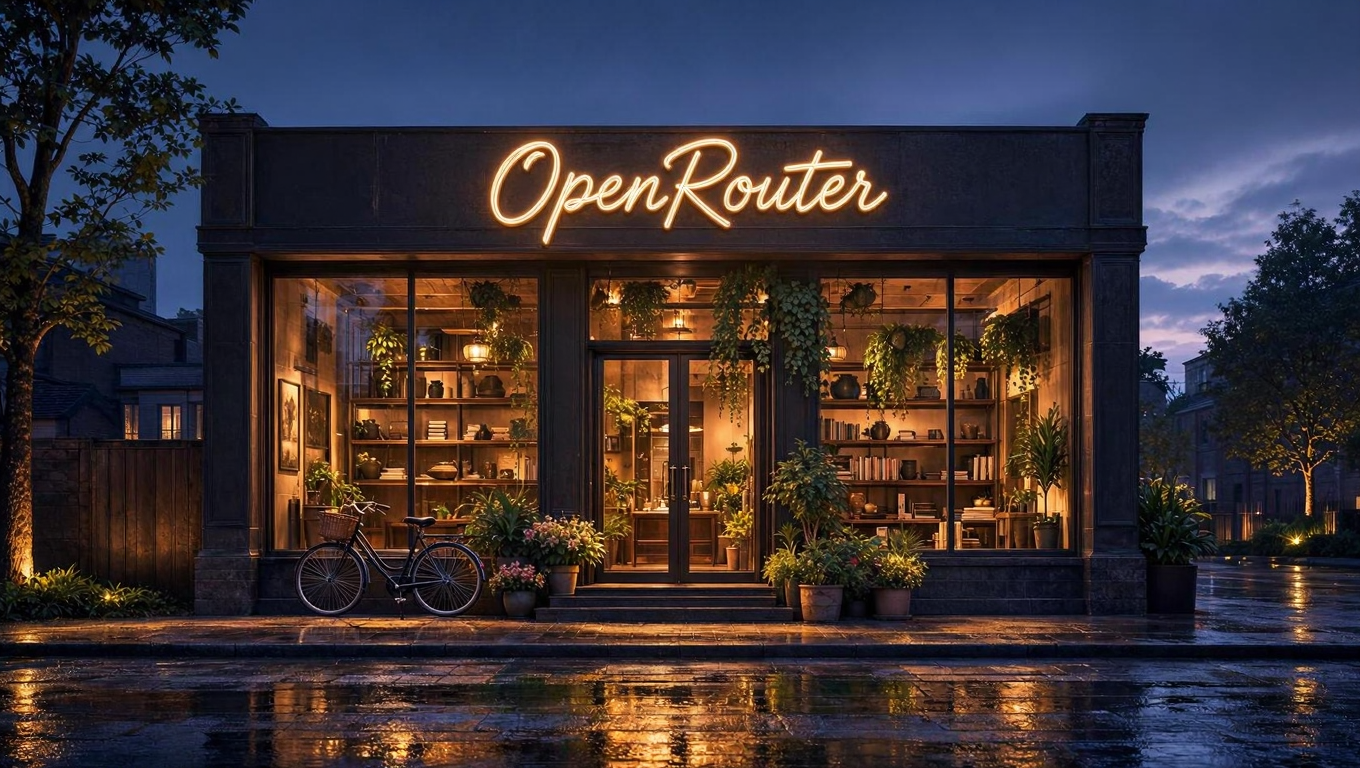
  • Texte vers image: Editorial architectural photograph of a contemporary neighborhood storefront at blue hour, glowing warmly against the dusk. Above the entrance, a warm-white neon sign in flowing hand-bent cursive reads exactly "OpenRouter", the only text in the scene. Large windows reveal a cozy, lived-in interior: wood shelves styled with books and ceramics, lush trailing plants, and soft pendant lighting. Potted plants and a bicycle rest by the entrance, and golden light spills across the wet pavement in gentle reflections. Straight-on composition, realistic materials, quiet street with no people. — généré avec Microsoft AI: MAI-Image-2.5 Pro

Bac à sable

Évaluations comparatives

Scores aux évaluations standardisées et réponses de ce modèle aux prompts communs des tests de référence. Des pourcentages plus élevés sont meilleurs — et chaque rang indique la position de ce modèle parmi les modèles évalués sur cette source.

Benchmark outputs summary for Microsoft AI: MAI-Image-2.5 Pro

  • Full wine glass: A wine glass filled to the brim with white wine, the surface level with the rim of the glass, standing upright on a plain wooden table. Straight-on eye-level shot, glass upright and not tilted, no other objects in the frame. (Ex æquo à la position 10e sur 60 pour ce prompt)
  • Closed umbrellas: Wide street-level photograph of about twelve people crossing a city street in heavy rain. Every person is carrying a closed, furled umbrella held down at their side. Not a single umbrella is open. Each umbrella is clearly visible. They are all getting soaked. No other people in the frame. (Ex æquo à la position 17e sur 60 pour ce prompt)
  • Three fingers: Close straight-on photograph of an open right hand raised palm towards the camera, with exactly three fingers extended straight up and the other two folded down into the palm. Plain background, nothing else in the frame. (Ex æquo à la position 1er sur 60 pour ce prompt)
  • Cards & dice: Exactly four playing cards face up in a single straight row on a polished marble counter, evenly spaced, all the same size, showing the seven of hearts, the eight of spades, the nine of diamonds and the ten of clubs from left to right. No other objects in the frame. Straight-on eye-level shot, soft even light. (Ex æquo à la position 1er sur 60 pour ce prompt)
  • Long exact string: A white A4 poster on a brick wall reading exactly "SPRING CLEARANCE - EVERYTHING 40% OFF - SATURDAY 14 JUNE, 9AM TO 6PM". No other text in the frame. (Ex æquo à la position 1er sur 60 pour ce prompt)
  • Multiple languages: Straight-on photograph of a white overhead directional sign in an international airport terminal, with a black arrow pointing right at the left end. The sign carries the same word in four scripts on four stacked lines, in this order from top to bottom: "DEPARTURES", then the Japanese 出発, then the Korean 출발, then the Arabic المغادرة. Clean sans-serif lettering, sharp focus, no other text anywhere in the frame. (Ex æquo à la position 1er sur 60 pour ce prompt)
  • Occlusion: Straight-on eye-level photograph of a plain wooden desk. On the left, a closed hardcover book with a dark red cover stands upright, its front cover facing the camera. A blue ceramic mug stands on the desk to the right of the book and clearly further back, about 20 cm behind it, positioned so that the right edge of the book overlaps and hides the left third of the mug. The mug's handle points to the right and the whole rim of the mug is visible. Bare desk surface is visible between the book and the mug. Nothing else on the desk. Plain wall behind, soft even light. (Ex æquo à la position 1er sur 60 pour ce prompt)
  • Mirror: Straight-on eye-level photograph of a bathroom vanity. A large rectangular mirror covers the wall behind the counter and its bottom edge meets the countertop, so both the objects and their reflections are visible. On the counter, a tall red toothbrush cup on the left and a tall green glass bottle on the right, both roughly 20 cm tall and well apart from each other. The mirror reflects the counter and the objects on it accurately. Nothing else in the frame. (Ex æquo à la position 42e sur 60 pour ce prompt)
  • Plain zebra: Photograph of a zebra standing side-on in short grass. Its coat is a uniform solid grey with no stripes, no bands and no markings of any kind anywhere on its body. The whole animal is visible. Sharp focus. (Ex æquo à la position 27e sur 60 pour ce prompt)
  • Times Square: Wide street-level photograph of Times Square in New York at night, wet asphalt reflecting the lights. Every billboard, screen, storefront window, awning, taxi door and road marking is completely blank — lit with plain colour fields and soft gradients only. No letters, no words, no numbers, no logos, no lettering of any kind anywhere in the frame. Sharp focus, straight-on shot. (Ex æquo à la position 11e sur 60 pour ce prompt)
  • Minimal diff: From the reference photo, change only the sign text to "ROUTE 7 ESPRESSO - OPEN TILL 8". Keep the sign, wall, lighting and framing identical. (Ex æquo à la position 5e sur 60 pour ce prompt)
  • Object removal: Remove only the second cup from the left in the reference photo. Leave the other four cups exactly as they are, in the same positions, and leave the shelf, towel, wall, plant and lighting untouched. (Ex æquo à la position 1er sur 60 pour ce prompt)
  • Person removal: In the reference photo, remove only the person in the yellow coat. Their shadow on the pavement and their reflection in the shop window must be removed as well. Reconstruct the pavement and the window glass behind them. The person in the red coat and the person in the green coat must stay completely unchanged, including their own shadows and their own reflections. Change nothing else in the frame. (Ex æquo à la position 1er sur 60 pour ce prompt)
  • Product placement: Product photograph of the ceramic mug from the reference image, standing upright on a café table. Show the same side of the mug, from the same side-on eye-level angle as the reference, with the handle on the right. The shape, proportions, colours, moulded relief and every painted detail must match the reference exactly. Only the setting and lighting change: soft daylight in a café interior, shallow depth of field. (Ex æquo à la position 1er sur 60 pour ce prompt)
  • Four references: Place the person from the portrait reference at the desk in the scene reference, wearing the rust orange canvas jacket from its reference and holding the navy blue travel mug from its reference in one hand. Keep the face, the jacket and the mug exactly as they appear in the references — same colours, same details, same proportions. Do not change the room. (Ex æquo à la position 24e sur 60 pour ce prompt)
  • Portraits: Studio headshot of a woman in a charcoal blazer against a mid-grey seamless backdrop, lit by a large softbox slightly above and to the left with a soft fill from the right, catchlights in both eyes. An 85mm look with shallow depth of field, skin texture and flyaway hairs kept rather than smoothed.
  • People in scenes: Photograph of four cooks working the pass in a restaurant kitchen at service, plating three dishes at once, several hands in frame and some of them overlapping. One cook partly hidden behind another, steam rising into hard overhead light, each face clearly a different person.
  • Animals: Photograph of a tabby cat asleep on a sunlit windowsill, fur lit from behind so the individual hairs glow at the edges, one ear turned toward the camera. Shallow depth of field, a houseplant soft in the background, quiet morning light.
  • Landscape and nature: Photograph of an old-growth temperate rainforest after rain, moss on every trunk and fallen log, ferns dense across the floor, thin fog between the far trees. Overcast light with no direct sun, everything from the nearest fern to the last trunk in focus.

Fournisseurs

Ce modèle est hébergé par un seul fournisseur. OpenRouter lui transmet directement chaque requête — aucune décision de routage à prendre.

Tarification

Le prix moyen que les clients paient réellement pour ce modèle, à côté des prix affichés par les fournisseurs. Grâce à la mise en cache et aux remises, le prix réellement payé est souvent bien inférieur au prix affiché.

Performances

Le débit est la vitesse à laquelle le modèle écrit (jetons par seconde — plus il est élevé, mieux c’est). La latence est le temps total d’aller-retour (plus il est faible, mieux c’est). Le TTFT est le délai avant le premier jeton — le temps avant de voir quelque chose apparaître (plus il est faible, mieux c’est).

Disponibilité

La disponibilité correspond au pourcentage des 3 derniers jours pendant lequel au moins un fournisseur répondait aux requêtes. La disponibilité du service correspond au pourcentage de temps pendant lequel l’inférence a été assurée avec succès. OpenRouter surveille en continu les fournisseurs et utilise le meilleur fournisseur suivant lorsque l’un d’eux renvoie une erreur.

Applications

Applications publiques qui envoient le plus de trafic à ce modèle. Un bon indicateur des charges de travail réelles en production — et un aperçu des cas d’usage auxquels ce modèle convient le mieux.

Activité

Volume de jetons et trafic des requêtes vers ce modèle au fil du temps.

API

Code prêt à l’emploi pour appeler ce modèle. L’API d’OpenRouter est compatible avec OpenAI — la plupart des SDK fonctionnent en remplaçant simplement l’URL de base. Seul le slug du modèle ci-dessous change d’un modèle à l’autre.

Actuellement indisponible via le routage dans la région UE. Documentation sur le routage intrarégional

Explorer d’autres modèles

Modèles d’IA avec vision : LLM multimodaux pour la compréhension d’imagesCollectionModèles de génération d’imagesCollectionClassements des modèles d’imageClassement
Latence de bout en bout
5,00 $US8,00 $US108,00 $US26,96s
--
Latence de bout en bout
26,96s

P50, meilleur fournisseur

Disponibilité (3 j)Le modèle était joignable. Requête acheminée vers un fournisseur.
100,00 %
Disponibilité (3 j)Le modèle a renvoyé un résultat d’inférence, quel que soit le fournisseur. Les erreurs et les réponses vides sont comptabilisées à son détriment.
99,89 %

Disponibilité au cours des 3 derniers jours

72 dernières heures
Disponibilité 99,89 %
Il y a 3 joursIl y a 2 joursHierMaintenant

Disponibilité au cours des dernières 24 heures

OpenRouter Availability
100,00 %

Lorsqu’une erreur survient chez un fournisseur en amont, nous pouvons rétablir le service en routant la requête vers un autre fournisseur opérationnel, si les filtres de votre requête le permettent. Vous pouvez accéder par programmation aux données de disponibilité de chaque fournisseur via l’ API des points de terminaison. Découvrez nos options d’ équilibrage de charge et de routage des fournisseurs.

1.
Favicon de https://i.love.koalas.ai/
KoalaBear
nouveau
20,9Mjetons
2.
Favicon de https://ask-chat.ai/
Ask-Chat.ai
nouveau
2,38Mjetons
3.
Favicon de https://beta.ponarth.com/
Neuronaft
nouveau
86Kjetons
4.
Favicon de https://stella-jones.ai/
AI Center
nouveau
60Kjetons
5.
Favicon de https://optimat.dk/
PhotoCleaner
nouveau
49Kjetons

Questions fréquentes

Microsoft AI's MAI-Image-2.5 is a high-quality image generation model available via Azure AI Foundry. It produces photorealistic and artistic images from text prompts with support for various aspect ratios.

MAI-Image-2.5 Pro coûte 5,00 $US/M tokens pour Text Input, 8,00 $US/M tokens pour Image Input et 108,00 $US/M tokens pour Image Output.

MAI-Image-2.5 Pro prend en charge les rapports d’aspect 1:1, 4:3, 3:4, 16:9, 9:16, 3:2 et 1 de plus.

MAI-Image-2.5 Pro accepte texte et images en entrée et renvoie images. Il est possible de joindre jusqu’à 1 image de référence à une requête de modification d’image.

MAI-Image-2.6, MAI-Image-2.6 Flash et MAI-Image-2.5 sont d’autres modèles de type image de Microsoft.

MAI-Image-2.5 Pro est sorti le 23 juillet 2026.

Autres modèles de Microsoft

Microsoft-Decision-1

Microsoft-Decision-1 is a small model built for fast decision-making. Instead of generating text, it reads the provided content and returns a calibrated probability for each fixed answer option, so the response carries its own confidence and can determine when an application acts, defers, or asks for review. It is post-trained from Qwen3.5-9B for single-pass scoring and suited to classification, routing, prioritization, verification, workflow control, agent guardrails, and AI judging. It is not intended for open-ended generation, conversation, translation, or summarization. Weights are updated continually while the API shape stays the same.

Learn more in Microsoft's announcement: https://commandline.microsoft.com/microsoft-decision-1-model-foundry/

Décisions0,042 $US / 0 $US
MAI-Voice-2.1-Flash

MAI-Voice-2.1-Flash is a low-latency text-to-speech model from Microsoft AI, optimized for real-time responsiveness. It produces natural, expressive speech across 23 languages, with human-like intonation, rhythm, and emotional nuance. It is suited for voice agents, assistants, call centers, and other interactive applications where latency and cost matter most.

On OpenRouter, set voice to a full voice ID with the model suffix, such as "en-US-Harper:MAI-Voice-2.1-Flash". A voice's locale sets the synthesis language. Set response_format to "mp3" or "pcm" (24 kHz mono). Harper and Grant support the agent, customer-call-center, educational, and narrator speaking styles, and many locale voices add emotion styles such as excited, happy, sad, and whispering. The full list of voices is in the supported_voices field of the models API. See the text-to-speech guide.
Parole15 $US/M characters
MAI-Voice-2.1

MAI-Voice-2.1 is Microsoft AI's highest-fidelity, most expressive text-to-speech model. It produces natural, studio-grade speech across 23 languages, with detailed prosody, nuanced expressiveness, and speaker consistency over long-form content. It is suited for audiobooks, podcasts, lectures, narration, and brand audio where maximum voice quality matters. The model prioritizes naturalness and expressivity over latency-critical generation.

On OpenRouter, set voice to a full voice ID with the model suffix, such as "en-US-Harper:MAI-Voice-2.1". A voice's locale sets the synthesis language. Set response_format to "mp3" or "pcm" (24 kHz mono). Harper and Grant support the agent, customer-call-center, educational, and narrator speaking styles, and many locale voices add emotion styles such as excited, happy, sad, and whispering. The full list of voices is in the supported_voices field of the models API. See the text-to-speech guide.

Parole22 $US/M characters
MAI-Image-2.6

MAI-Image-2.6 is an image generation and editing model from Microsoft AI, the precision tier of the MAI-Image-2.6 family alongside the faster MAI-Image-2.6 Flash. It is suited for design-ready visuals and controlled, iterative editing, and is particularly strong at multi-reference editing that combines people, products, styles, and scenes from up to five input images while preserving composition, style, and detail. Aspect ratio can be fixed or left to the model to choose for the composition.

Image8 $US / 38 $US
MAI-Image-2.6 Flash

MAI-Image-2.6 Flash is the lower-latency, lower-cost member of the MAI-Image-2.6 family from Microsoft AI, built for latency-sensitive, high-throughput production image generation and editing at comparable quality to the precision tier. It supports the same multi-reference editing with up to five input images and the same fixed or model-chosen aspect ratios.

Image2,50 $US / 19 $US
MAI-Transcribe 2

MAI-Transcribe 2 is a multilingual speech-to-text model from Microsoft AI, ranked #1 on the FLEURS multilingual benchmark. It supports 60 languages with automatic language identification, code switching for mixed-language speech, speaker diarization, word-level timestamps, keyword biasing for domain-specific terminology, and configurable verbatim or clean transcription styles. It is suited for captions, call transcription, subtitling, accessibility, and other voice-enabled applications, and is faster than MAI-Transcribe-1.5 on long-form audio.

On OpenRouter, set response_format to "verbose_json" for segment timestamps, and add timestamp_granularities: ["word"] for word-level timestamps. Set provider.options.azure.diarization.enabled to true for speaker labels, provide keywords through provider.options.azure.phraseList.phrases, and select a transcription style through provider.options.azure.enhancedMode.modelOptions.transcribeStyle. See the speech-to-text guide.

Transcription0,10 $US/hour
MAI-Image-2.5 Pro

Microsoft AI's MAI-Image-2.5 is a high-quality image generation model available via Azure AI Foundry. It produces photorealistic and artistic images from text prompts with support for various aspect ratios.

Image8 $US / 108 $US
MAI-Voice-2-Flash

MAI-Voice-2-Flash is a low-latency text-to-speech model from Microsoft AI for voice agents, assistants, call centers, accessibility, narration, and other interactive applications. It generates expressive 24 kHz mono speech across 15 languages and 18 locales, with fine-grained control over tone and delivery. Voice prompting and cloning require Microsoft AI-approved access and appropriate speaker consent.

Parole15 $US/M characters
MAI-Voice-2

MAI-Voice-2 is an expressive text-to-speech model from Microsoft AI. It is suited for conversational assistants, media narration, accessibility, education, and other long-form voice applications. It supports 15 languages across 18 locales, fine-grained control of tone and delivery, multi-speaker generation, and voice prompting from short audio clips without fine-tuning. The model prioritizes naturalness and expressivity over latency-critical generation.

Parole22 $US/M characters
MAI-Transcribe 1.5

MAI-Transcribe 1.5 is a multilingual speech-to-text model from Microsoft AI. It is suited for captions, call transcription, subtitling, accessibility, and other voice-enabled applications, with reliable transcription across 43 languages, diverse accents, and noisy real-world audio. It supports automatic language identification and keyword biasing for domain-specific terminology, and improves long-form transcription speed over MAI-Transcribe-1. Speaker diarization is not supported.

Transcription0,36 $US/hour
MAI-Image-2.5

Microsoft AI's MAI-Image-2.5 is a high-quality image generation model available via Azure AI Foundry. It produces photorealistic and artistic images from text prompts with support for various aspect ratios.

Image8 $US / 47 $US
Phi 4 Mini Instruct

Phi-4-mini-instruct is a lightweight open model built upon synthetic data and filtered publicly available websites - with a focus on high-quality, reasoning dense data. The model belongs to the Phi-4 model family and supports 128K token context length. The model underwent an enhancement process, incorporating both supervised fine-tuning and direct preference optimization to support precise instruction adherence and robust safety measures.

TexteContexte de 131K
Phi 4 Reasoning Plus

Phi-4-reasoning-plus is an enhanced 14B parameter model from Microsoft, fine-tuned from Phi-4 with additional reinforcement learning to boost accuracy on math, science, and code reasoning tasks. It uses the same dense decoder-only transformer architecture as Phi-4, but generates longer, more comprehensive outputs structured into a step-by-step reasoning trace and final answer.

While it offers improved benchmark scores over Phi-4-reasoning across tasks like AIME, OmniMath, and HumanEvalPlus, its responses are typically ~50% longer, resulting in higher latency. Designed for English-only applications, it is well-suited for structured reasoning workflows where output quality takes priority over response speed.

TexteContexte de 33K
Phi 4 Reasoning

Phi-4-reasoning is a 14B parameter dense decoder-only transformer developed by Microsoft, fine-tuned from Phi-4 to enhance complex reasoning capabilities. It uses a combination of supervised fine-tuning on chain-of-thought traces and reinforcement learning, targeting math, science, and code reasoning tasks. With a 32k context window and high inference efficiency, it is optimized for structured responses in a two-part format: reasoning trace followed by a final solution.

The model achieves strong results on specialized benchmarks such as AIME, OmniMath, and LiveCodeBench, outperforming many larger models in structured reasoning tasks. It is released under the MIT license and intended for use in latency-constrained, English-only environments requiring reliable step-by-step logic. Recommended usage includes ChatML prompts and structured reasoning format for best results.

TexteContexte de 33K
MAI DS R1

MAI-DS-R1 is a post-trained variant of DeepSeek-R1 developed by the Microsoft AI team to improve the model’s responsiveness on previously blocked topics while enhancing its safety profile. Built on top of DeepSeek-R1’s reasoning foundation, it integrates 110k examples from the Tulu-3 SFT dataset and 350k internally curated multilingual safety-alignment samples. The model retains strong reasoning, coding, and problem-solving capabilities, while unblocking a wide range of prompts previously restricted in R1.

MAI-DS-R1 demonstrates improved performance on harm mitigation benchmarks and maintains competitive results across general reasoning tasks. It surpasses R1-1776 in satisfaction metrics for blocked queries and reduces leakage in harmful content categories. The model is based on a transformer MoE architecture and is suitable for general-purpose use cases, excluding high-stakes domains such as legal, medical, or autonomous systems.

TexteContexte de 164K
Phi 4 Multimodal Instruct

Phi-4 Multimodal Instruct is a versatile 5.6B parameter foundation model that combines advanced reasoning and instruction-following capabilities across both text and visual inputs, providing accurate text outputs. The unified architecture enables efficient, low-latency inference, suitable for edge and mobile deployments. Phi-4 Multimodal Instruct supports text inputs in multiple languages including Arabic, Chinese, English, French, German, Japanese, Spanish, and more, with visual input optimized primarily for English. It delivers impressive performance on multimodal tasks involving mathematical, scientific, and document reasoning, providing developers and enterprises a powerful yet compact model for sophisticated interactive applications. For more information, see the Phi-4 Multimodal blog post.

TexteContexte de 131K
Phi 4

Microsoft Research Phi-4 is designed to perform well in complex reasoning tasks and can operate efficiently in situations with limited memory or where quick responses are needed.

At 14 billion parameters, it was trained on a mix of high-quality synthetic datasets, data from curated websites, and academic materials. It has undergone careful improvement to follow instructions accurately and maintain strong safety standards. It works best with English language inputs.

For more information, please see Phi-4 Technical Report

TexteContexte de 16K0,07 $US / 0,14 $US
Phi-3.5 Mini 128K Instruct

Phi-3.5 models are lightweight, state-of-the-art open models. These models were trained with Phi-3 datasets that include both synthetic data and the filtered, publicly available websites data, with a focus on high quality and reasoning-dense properties. Phi-3.5 Mini uses 3.8B parameters, and is a dense decoder-only transformer model using the same tokenizer as Phi-3 Mini.

The models underwent a rigorous enhancement process, incorporating both supervised fine-tuning, proximal policy optimization, and direct preference optimization to ensure precise instruction adherence and robust safety measures. When assessed against benchmarks that test common sense, language understanding, math, code, long context and logical reasoning, Phi-3.5 models showcased robust and state-of-the-art performance among models with less than 13 billion parameters.

TexteContexte de 128K
Phi-3 Medium 4K Instruct

Phi-3 4K Medium is a powerful 14-billion parameter model designed for advanced language understanding, reasoning, and instruction following. Optimized through supervised fine-tuning and preference adjustments, it excels in tasks involving common sense, mathematics, logical reasoning, and code processing.

At time of release, Phi-3 Medium demonstrated state-of-the-art performance among lightweight models. In the MMLU-Pro eval, the model even comes close to a Llama3 70B level of performance.

For 128k context length, try Phi-3 Medium 128K.

TexteContexte de 4K
Phi-3 Mini 128K Instruct

Phi-3 Mini is a powerful 3.8B parameter model designed for advanced language understanding, reasoning, and instruction following. Optimized through supervised fine-tuning and preference adjustments, it excels in tasks involving common sense, mathematics, logical reasoning, and code processing.

At time of release, Phi-3 Medium demonstrated state-of-the-art performance among lightweight models. This model is static, trained on an offline dataset with an October 2023 cutoff date.

TexteContexte de 128K